

Some friends have asked, “How can you write four books in six months?” This is an obvious question because The Greek Boxer was released on November 15, 2025; American Andarte on January 15, 2026; Wolf Pelt on March 15; and Fifty-Seven on May 15. The answer is, of course, sleight of hand. I wrote the four books between 2017 and 2022, and I am only now releasing them. Here’s what happened.
In 2017, after the publication of Rails of War by the University of Nebraska Press, I had an agent, an excellent agent with an overstuffed Rolodex. Ronald Goldfarb secured my University of Nebraska Press contract. Ron and his assistant, Gerrie, were great. And the best part was that they were only a couple of miles from our home in Alexandria, Virginia. That meant no torturous trips to New York City, where every other literary agency of any salt is located. I’m not a fan of NYC.
I began working on The Greek Boxer by fictionalizing and expanding a 15,000-word monograph written in the early 1990s on the Great Colorado Coal Strike of 1913-14. When I showed Ron my first draft, we had mild disagreements about action scenes. He wanted more. He also worried that the genre was nonconformist. The Greek Boxer is not narrative nonfiction. It’s fiction but noted with a bibliography. I’ve heard this genre described as “creative nonfiction.” I don’t know what to call it; it’s just the way I liked to write. Fiction is fine, but I like my readers to know when history jumps out at you. Hence, my footnotes and references.
So, I kept writing, and American Andarte followed. Then Wolf Pelt. Ron liked all three, but the genre did not fit neatly into commercial preconceptions. Ron passed away before I finished Fifty-Seven.
Ron’s passing left me agentless. I halfheartedly tried to wrangle new representation, my least favorite part of writing. My lackadaisical efforts resulted in nibbles and noncommitment. So, my four books lived only in my mind and on my cloud for the coming years. Then I decided to self-publish using my own LLC, Alinet. Now, the four books are tangible and available. You can find them here: https://books2read.com/u/bWXlo7
I like “The Greek Stories” genre, a noted factual format with fictional action. And if anyone is still confused, I cannot write a book in 90-days. That’s what AI is for.
I hope you enjoy the series, and I look forward to your feedback. –SJH
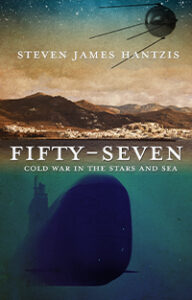 Fifty-Seven: Cold War in the Stars and Sea is the fourth and last book in “The Greek Stories.” It’s the fall of 1957, and the Soviet Union’s launch of Sputnik catches the U.S. flat-footed. The U.S. missile program is years behind. The U.S., however, had launched the first atomic-powered submarine, Nautilus, in 1956 and Seawolf soon after. America’s engineers and scientists race to develop the capability to launch missiles while submerged. But Nautilus and Seawolf had the same limitations. Although they could prowl the oceans longer than conventional submarines, when they required maintenance, they had to return to Groton, Connecticut, an ocean away from their patrol area. Enter Stavros Niarchos.
Stavros Niarchos, a golden Greek, a wealthy shipping magnate, was a friend of the Americans. Niarchos buys a rundown shipyard near the Port of Piraeus and undertakes modernization to support his commercial enterprise. The new yard will also provide NATO atomic submarines with a secret maintenance bay in the eastern Mediterranean on the doorstep of the Soviet Black Sea fleet. But the communists…
And for those following along for the romance, there are at least three pairings of interest, two with happy endings. Fifty-Seven will be available everywhere May 15, 2026.

These four books, “The Greek Stories” series, have come out over the past six months. It’s been a trying time for Kathy and me. But the support of a spectacular publication team made it possible. Editor Jennifer Caven is the best. She makes my writing look like I know tenses, proper capitalization, and how to keep a plot on track. Cover Designer Elizabeth MacKenney created the captivating and tonally integrated series. My communication with Beth always begins with, “I can’t wait to see what you come up with.” Nancy Coffman and the team at Websults manage the tedious chores of the web and communications. They are the best, prompt, and professional. Thanks to everyone for making “The Greek Stories” come to life. –SJH
 Wolf Pelt: Cold War in Greece, Love, and Trust Revealed
In 1951, the newly established American CIA is getting its feet on the ground. A bankrupt British empire sells its cash-happy cousins a mole-ridden campaign to overthrow the Albanian communist government. The Brits call this armed insurrection Operation Valuable, and the CIA Operation BG/Fiend. Infiltration and logistics flow from Greece, a country overrun with spies from far and wide.
Stavros returns to Greece after World War II and his service in the OSS as commander of a Greek operational group. During the war, he wreaks havoc on Germans, learns “the Greek way,” and falls in love with the captivating Dimitra. After the war, the CIA recruits Stavros to return to Greece, posing as an academic pursuing his PhD. His actual mission is to organize a “cultural influence group” and support logistics for Operation BG/Fiend. He and his love, Dimitra, now working with the Archaeological Society of Athens, share a deep and fraught relationship.
Stavros encounters much local color as he winds his way through Greece. Personalities are not always what they seem, and Stavros falls into a precarious relationship with devious Penelope, “the mouse.”
“The Greek Stories” series
Wolf Pelt is Book #3 in this four-book series. For a full background on Stavros, please read The Greek Boxer, Book #1, and American Andarte, Book #2. Fifty-Seven, Book #4, will release in mid-May. – SJH

I like Greece. I have a loving family there and have visited many times. The devastation wrought on this small country by fascist occupation during World War II, and the stalking Civil War that followed, set the stage for Wolf Pelt.
In 1951, Greece began stepping away from the worst years of torture, fratricide, and deprivation thanks to the funding and political guidance of the United States. Its strategic sea lanes and proximity to the Soviet Bloc gave it two personalities. On the surface, things were getting better in 1951, and peace prevailed. But not far beneath that placid patina, a domain of spies, espionage, and anything-goes noesis percolated. The Cold War was just that: a war by other means. But not that different from traditional war. Operation FIEND was a CIA and British effort to undermine the communist government of Albania by infiltrating armed resistance cells. FIEND was Frank Wisner’s, the CIA’s first Deputy Director of Plans, inaugural effort to field a surrogate Cold War army. He did it from Greece. You could call FIEND a Greek tragedy with Albanian actors.
It is trite to say that geography is destiny. Perhaps not when Napoleon uttered it before invading Russia, but trite today. Where Greece falls on the globe has presented Greeks with opportunities and perils like few other countries. The dichotomy played out in 1951 as the world’s superpowers sought to arrange geography to their advantage. I offer in Wolf Pelt a pawn’s advance on the chessboard of the Great Game for your enlightenment and entertainment.
Curious about the title? In the book, you’ll be treated to an excerpt from the Iliad by Homer, “Marauding Through the Night (Book X).” Spoiler alert: Dolon, a Trojan spy, circulating at night among the Greeks wearing a wolf’s pelt, has an unpleasant encounter with Odysseus and Diomedes. – SJH
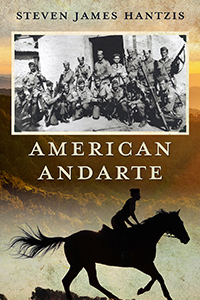 I am pleased to announce the launch of American Andarte: An OSS Commando Fights for Greece, available through many sellers in eBook and paperback. For those who read The Greek Boxer, Book #1 in my series, “The Greek Stories,” thank you. The two books have different settings and tones. The Greek Boxer is told in an “Old Country” tone and reflects the oppression and hardship, and challenges of the first generation of Greek immigrants in America. American Andarte advances a generation and strives for a modernistic, can-do, World War II tone. The second generation of Greeks, like my protagonist, Stavros, has benefited from the success and drive of their forefathers and foremothers. They are educated, more integrated, and determined to live the American Dream. Yet, they too face societal resistance and maintain an intractable cultural identity, a haven from which to organize, network, worship, and fight as they must against prevailing headwinds. That identity, broader and more dispersed, lives on today in the Greek American landscape, and I am proud to be a small part of it.
I posted About American Andarte on my author blog if you’d like a glimpse into the book. But before I sign off, I’d like to praise my Alinet, LLC publishing team; they don’t get enough credit, and that’s my fault. Jennifer Caven is my editor and foremost external critic. She’s relentless, and her changes and suggestions make it look like I can write. Elizabeth MacKenney designs my covers and transforms my half-baked ideas into honest-to-God art. Nancy Coffman at NC Strategic Solutions manages my website and media, along with the good folks at Websults. — SJH
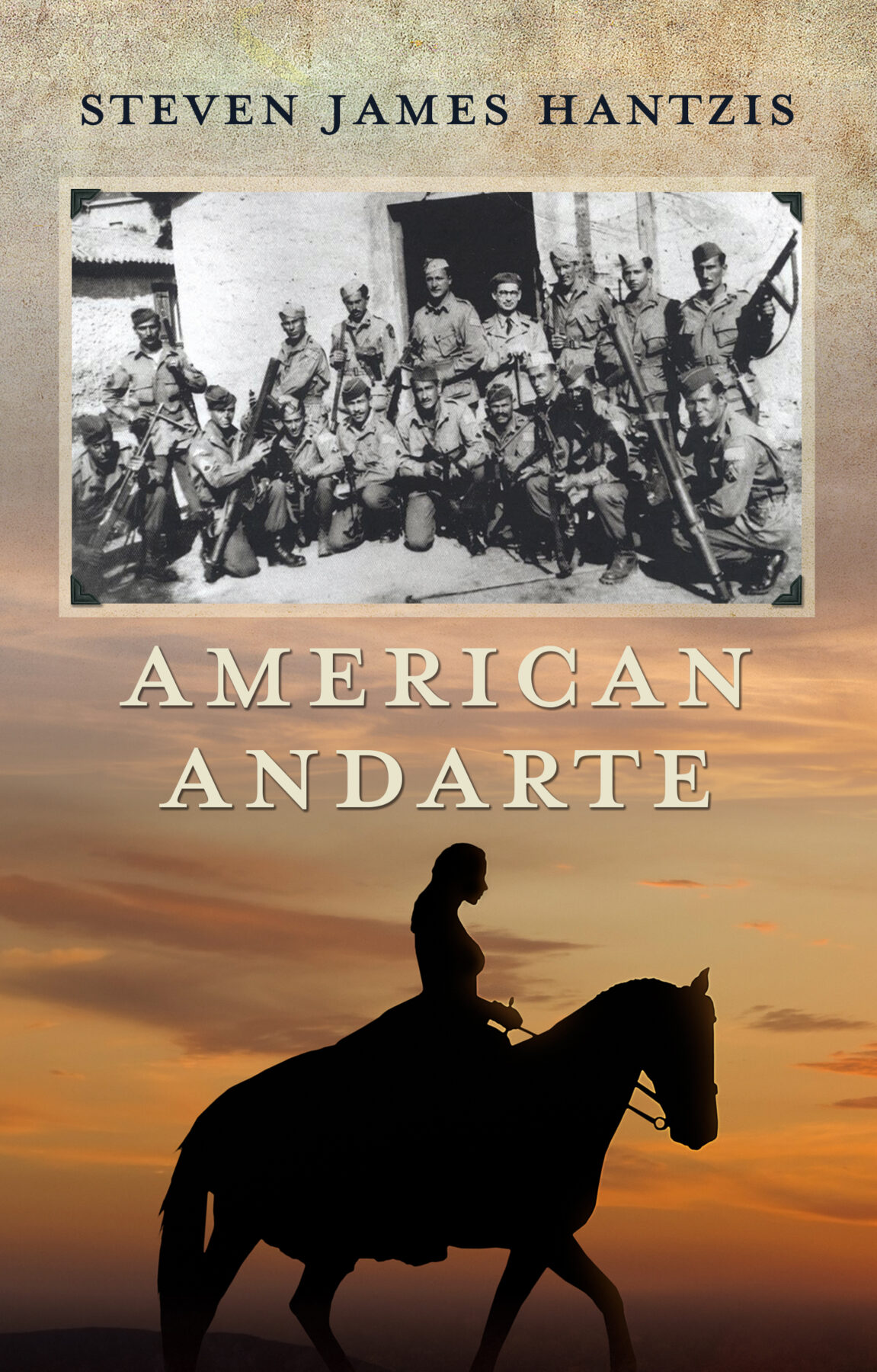
 American Andarte will launch on January 30, 2026. It’s a long book, roughly 430 pages, minus endnotes, photographs, bibliography, maps, and an acronym key. I apologize to anyone expecting the industry standard 230-page issue. It’s a big story to tell.
The first part of the book will introduce you to Stavros, the protagonist, and his family. It’s 1957, and the family is parsing an obligation of honor carried forward from a generation before. When Stavros returns to his home, his thoughts and the storyline flash back to World War II. Stavros is a babe in arms during the first book of the series, The Greek Boxer. When Pearl Harbor strikes, he’s of military age but deferred because of his teaching position at Park College in Kansas City, Missouri. He relinquishes his deferment and enlists in a special US Army unit called the Greek Battalion.
Stavros is off to training, first in the Greek Battalion, then as an Office of Strategic Services (OSS) commando. You can easily access the sources in my notes and bibliography, documenting this section. The government kept OSS operations in Greece during World War II top secret until recently. Also, only a few OSS veterans wrote or spoke about their experience. You’ll find these sources listed in the bibliography. Thus, their training in the US Army, OSS, and transport to theater is largely nonfiction.
Speaking of nonfiction, American Andarte backgrounds the reader in events that happened before the Americans arrived in theater in 1944. The Greeks began resisting following the Italian invasion of 1940. The Greek army and andartes defeated the Italians, pushed them back into Albania, and that’s why the Germans came to the Italians’ rescue in the spring of 1941. British commandos parachuted into Greece in the fall of 1942 and began operations and coordination with local andartes. They were successful in critical sabotage missions and political juggling among the Greeks well before the Americans arrived. Most importantly, for American Andarte, the two British commanders, Eddie Myers and Christopher Woodhouse, wrote compelling books about their time in Greece. Amazing stories.
Once Stavros and his Operational Group (OG) land in Greece, the story moves on two axes. The first is military, how the OG operates, how they coordinate with the local andartes, tactics, weapons, and strategy. The fictional missions in the book are composites of real-life missions. The second storyline is more personal. It is less about Stavros the leader and more about Stavros the man. The Americans work with the Greek andartes, led by a captivating woman named Dimitra. Slowly, perhaps awkwardly, a relationship develops between the two leaders, two very different people with unique backgrounds. The story of Dimitra illustrates much about the role of women in Greece during the occupation. Dimitra and Stavros are both educated, and their dialogue and relationship let the reader glimpse a complex world.
And here’s a note on the dialogue, especially the common usage dialogue among the Greek locals and andartes. It may seem stilted, but the style of speech comes straight from the two books by Woodhouse and Myers, who captured the Greek informalities and idioms, and I trust the reader will catch on.
 The ending, well, you can judge for yourself. Please remember that there are two more books in the series: Wolf Pelt and Fifty-Seven. – SJ Hantzis
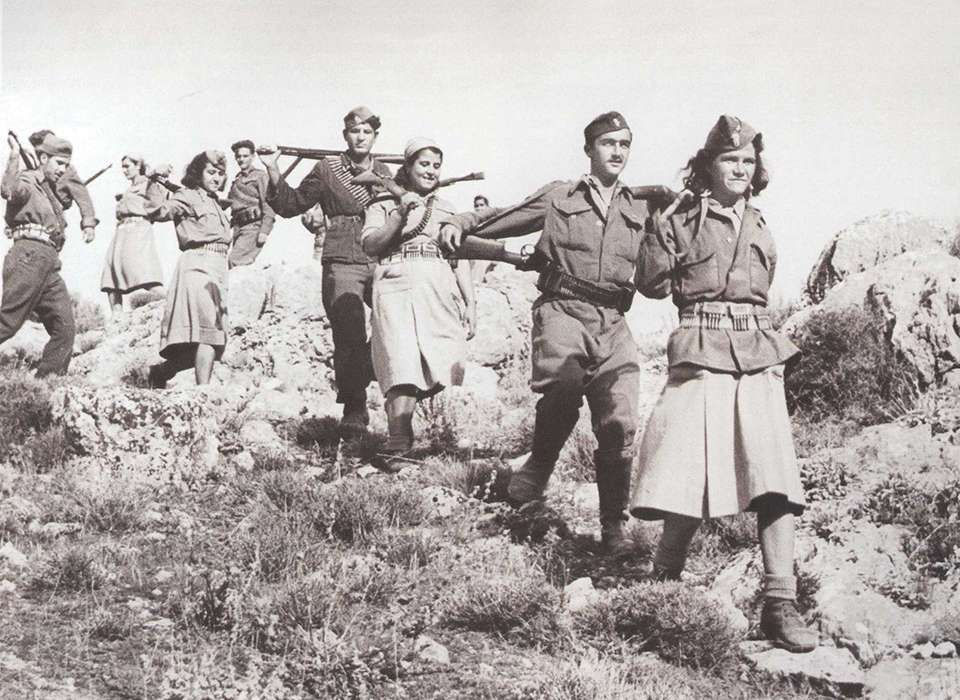
One of many things the American OSS commandos in Greece found unusual was the incorporation of female fighters into the armed resistance against the Nazis. The largest Greek resistance organization, EAM-ELAS, which the Americans fought alongside, was left-led and encouraged women to fight and to vote within its ranks. In American Andarte, Stavros, the protagonist and leader of his OSS Operational Group, is assigned to coordinate with an EAM-ELAS unit led by the captivating Dimitra. Her story will enlighten readers about the challenges women confronted during the occupation. Dimitra, having been active in the resistance for longer, is more seasoned than the Americans, whom she often declares bewildering.
In the following vignette, Stavros and a combined column of OSS Commandos and Greek andartes enter a village on the way from Parga, their landing on the west coast of Greece, to Chomori, where they will find quarters. Stavros spots something unusual. He asks the leader of the Greek andartes about the oddity.
***
On the afternoon of the third day, the fighters forded the Achelous River and stopped in the village of Loutra. The spring rains had filled the river’s banks, and the fifty meters of submerged rock pathway proved treacherous. The men lifted their weapons, packs, and sleeping bags above their heads and waded. Everyone except those riding horses was soaked to their belts. In Loutra, Stavros noticed the women wore dresses pinned on their right shoulders. He asked Yiorgos.
“They pin their dresses so that the Germans won’t rip and tear them as they have before. The Germans check their shoulders for bruises. They see a bruise . . . they shoot the woman. Or hang her or detain her. The bruises are proof to the Germans that they fired rifles. The only women firing rifles are andartes and reserves.” — SJ Hantzis
 How did I choose the settings for my four-book series, The Greek Stories? Greece has an interminable history with infinite inflection points. So, yes, it was tough, but not actually. My family’s history in America starts a few years before the first book, The Greek Boxer. My grandfather and fictionalized protagonist, Harry Hantzis, came to America in 1906 with his brother. He returned to Greece in 1912 to fight in the First Balkan War. His return to America in 1914 coincides with the Great Colorado Coal War, the bloodiest episode in American labor history and the historical reference for the book. Although my grandfather, to my knowledge, never traveled to Colorado, an obligation of honor sets my fictional grandfather upon this path. The Greek Boxer is a study of honor and obligation.
From 1914, I leap ahead to a most interesting time, World War II. My protagonist, Stavros, grows from a babe in arms in The Greek Boxer, into a military-aged male who joins a specialized U.S. Army unit, the Greek Battalion. Then after its disbandment because of political pressures, Stavros volunteers for an Office of Strategic Services (OSS) commando group to fight in Greece alongside the local resistance, the andartes. American Andarte is both history and fiction. Until recently, the government classified the exploits of OSS commandos in Greece as top secret, and few people wrote about them. I was lucky to be tipped off about this incredible US Army battalion and subsequent OSS campaigns by a dear friend with strong ties to our military.
Sticking with my protagonist for the final two books in the series, Stavros is now a CIA operative in Greece. In 1951, Greece was rife with espionage from every quarter. Greece and Turkey are on the cusp of NATO ascension. The freshly minted CIA is flush with untraceable money and little accountability. The British are broke and hand off their mole-ridden campaign to overthrow the communist regime in Albania to the CIA, who name it Operation Fiend and run it from Greece. The title for book #3, Wolf Pelt, comes from Homer’s account of the Trojan War, the Iliad. In that epic poem, Dolon, a spy for Troy, sneaks among the Greeks at night wearing a wolf’s pelt for disguise. Great Odysseus discovers him with predictable consequences.
Book #4, Fifty-Seven, moves the timeline up to 1957. The Soviet Union had just launched Sputnik, catching America off guard and far behind. America had, however, launched a nuclear-powered submarine, the USS Nautilus (SSN-571), in 1956. But America had no place to refuel and maintain the boat except Groton, Connecticut, a long sail from the critical theater of the eastern Mediterranean. The Greeks step up and undertake an ambitious refit of an old shipyard to meet the needs of its NATO partners. Of course, the communists are lurking, and Stavros, now at CIA headquarters, returns to Greece to ferret out the troublemakers. His long-time love interest, Dimitra, is there, as is Stavros’s running companion, Christakis, who is undercover in Enosis, the militant movement to free Cyprus from British control.
These four settings are, in my estimation, under-reported but exciting, and consequential. Anyone who wants more details can read through my bibliographies and notes included in all four books. As always, I write fiction, but I love to anchor my fiction in genuine history.
I hope you enjoy The Greek Stories and find them entertaining and educational. Here’s to your delight; may you enjoy reading these books as much as I enjoyed writing them. — Steven James Hantzis.
Release dates
The Greek Boxer November 25, 2025
American Andarte January 15, 2026
Wolf Pelt March 15, 2026
Fifty-Seven May 15, 2026
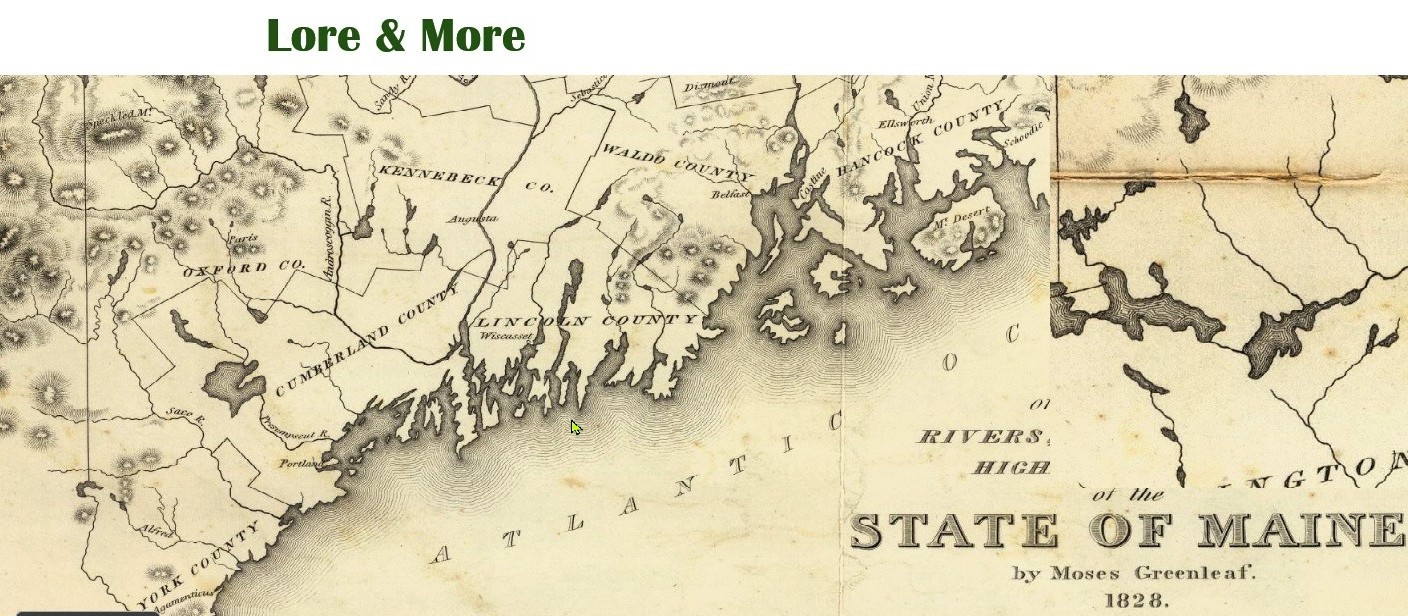
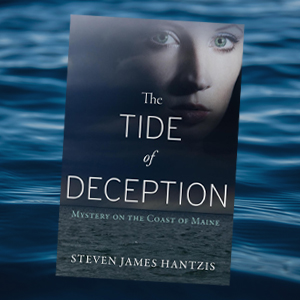
From The Tide of Deception: Mystery on the Coast of Maine
by Steven James Hantzis
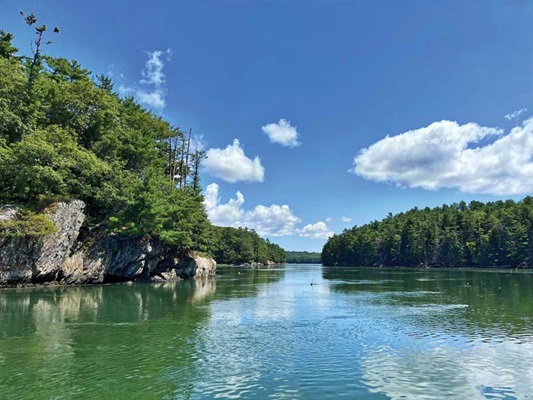
Ovens Mouth, Boothbay, Maine
We love our house on Barters Island, and we’re lucky enough to have deep water. We keep our 25-foot C-Dory, Catleen, on our float. One of the easy-to-get-to destinations, only minutes away, is a narrow passage called Oven’ Mouth. Through this thousand-yard gut, tidal currents fill and empty a sizable estuary of Back River. At its narrowest, the passage between land reduces to 150 feet, and the navigable channel is even narrower. The current runs six knots with the changing tides. When piloting a boat and traveling with the current, your speed must be faster than the current to maintain control of your vessel. Otherwise, you become buoyant debris at the hydrologic whims of nature.
Wabanaki Native Americans used Oven’s Mouth as a shortcut between the Damariscotta and Sheepscot Rivers in pre-colonial times. They paddled birchbark canoes down the Damariscotta, then portaged west through the pines and oaks across what is now the Dolphin Mini Golf attraction. At Oven’s Mouth, they paddled to the chilly Sheepscot. This route saved them the longer journey via the choppy mouth of the Damariscotta, across broad Boothbay Harbor, then through Townsend Gut to the Sheepscot. Along their journey, these hunter-gatherers foraged through varied eco-cultures, enjoying the buffet.
Maine has a long history of getting places by water. Water was conveyance long before roads. Overwater moved the shore’s bounty: deer and beaver pelts and luxurious hides of marten, otter, ermine, fisher, and fox. Intricate brown ash basketry and other barterable items made their way to Native American markets along the free-flowing streams, rivers, and coastal routes. When Europeans arrived, water moved the men and ships, who enforced new rules of trade.
For the Wabanaki, Oven’s Mouth was more than just a shortcut. It was a sacred place, a place of spirits that protected and guided them. As they paddled in the narrow channel to the Sheepscot, they sang songs of gratitude to the spirits, the earth, and the water.
On September 9, 1777, as the sun dipped beyond the western shore of the Sheepscot, a clan of Wabanaki hunters pulled their canoes through a muddy flat. Wading in muck to their knees, they reached shore on the northern tip of Barters Island. All were wary of the uncertain sky, turning leaves, and an approaching storm. As they paddled through Oven’s Mouth, their laughter and songs echoed off the rocky walls. But when they reached the wider Cross River, they saw something that upset their absorbing rhythm.
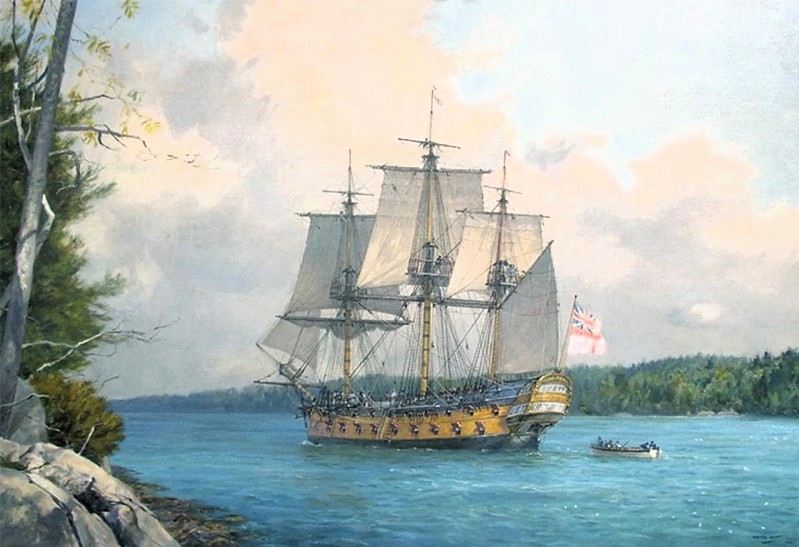
HMS Rainbow sets off on her 15-mile trek upriver into hostile territory during the American Revolution. It was a high-risk passage against both the elements and the odds, but her indefatigable captain deemed it “a military necessity.” Geoffrey Hunt, Trouble Heading for Wiscasset: H.M.S. Rainbow in the Sheepscot River, Maine, 10th September 1777 (Private Collection) US Naval Institute
A ship approached, her three topsails luffing in the confused wind. Only the small sails fore and aft billowed. Men scrambled on the yardarms, reefing the lower sails. The hunters knew European ships. White men had plied Wabanaki waters for more than a century. But this one was different. The men on the top decks wore red coats, and the pennant flying astern told the Wabanaki this was the British tribe. This ship was bigger and more heavily armed than any they had seen before. The Wabanaki counted twenty-two gunports on her starboard side, with the lower ports battened to thwart the churning chop. The men aboard looked hard and fierce, and the Wabanaki were lucky to be ashore and protected. The spirits were pleased.
The hunters watched the ship pass and wondered where she was going. Was she lost? She was too large for the passage, and there was no settlement or European encampment in her direction. The nearest British town was Wiscasset, five miles to the north on the main channel of the Sheepscot.
Aboard the HMS Rainbow, Sir George Collier, captain and acting commodore of the British Royal Navy forces in Halifax, came to the same conclusion. Night approached, and the storm began. Captain Collier was an aggressive, tested commander. But he was now responsible for a British ship of the line floundering in unknown water, amid rocky ledge, submerged hazards, sucking mudflats, and an unforgiving tidal flow. The local fisherman, impressed as a pilot in Boothbay Harbor, claimed to be a royalist. He claimed to know the route to Wiscasset, where the mast-ship Gruel was loading its nautical contraband for a trip to France. That was Captain Collier’s mission. Take or destroy the Gruel. Now he suspected his involuntary pilot to be an American militia sympathizer. His compass reading didn’t lie. They were sailing east, not north. He would not allow the Rainbow to founder. He called the order, “Cut the lashings on the ‘best bower’ to the starboard foremast channel. We will anchor here. Douse any sails reefed or still set.” Thus, the outsized Rainbow at 133 feet along her waterline, and drafting twenty feet, set anchor in the narrows of Oven’s Mouth.
Amid the endless Maine frontier in 1777, countless white pine trees towered to perfection. The British and the French marveled at their utility for nautical construction. Both nations had depleted their native forests of oak and other suitable timber. Maine’s prized specimens rose forty feet or more and measured forty inches in diameter at their flawless trunks. Turned by the hands of journeymen, these ‘sticks’ became masts, bowsprits, topmasts, yards, and spars at the Halifax Naval Yard or one of six Royal Navy Dockyards in England. They were perfect for masting the brutes of the sea, ships of the line, the vessels that decided battles, blockades, and the fates of nations.
Continental wars blocked British access to Baltic timber in the 1650s. And even with access, Baltic trees were seldom more than twenty-seven inches in diameter. So, King William III appointed a surveyor general for New England. The surveyor’s minions tramped the virgin forests and marked ramrod pines greater than twenty-four inches with three axe strikes in the symbol of a broad arrow. These were the king’s pines. This possessive insult enraged the American colonists. The British applied severe penalties for stealing these pines, skirmishes erupted, and a black market flourished. In 1772, colonists revolted in Weare, New Hampshire. Early in the morning, after an overnight rally in a local tavern, townspeople blackened their faces. They set upon a dozing sheriff and his deputy and whipped them senseless with switches. The rioters shaved the manes and tails of the lawmen’s horses. They even severed the poor beasts’ ears, then mounted the sheriff and deputy to ride out of Weare down a gauntlet of the aggrieved. Colonial resentment smoldered as the Pine Tree Riot predated the Boston Tea Party by a year and a half.
By 1777, with the colonies in full revolt and the French backing their rebellion, the British needed masts. These strategic components in the hands of the French would be doubly damaging. The intelligence possessing Captain Collier as he advanced up the treacherous Sheepscot was that a suspected mast shipment was making ready north of Wiscasset, bound for Cherbourg.
In the early hours of September 10, Captain Collier ordered the launch of two of the Rainbow’s cutters, the smaller boats for transporting the Royal Marines. He ordered a cutting-out raid on the Gruel, and a hundred marines and sailors set off from Oven’s Mouth under the cover of darkness and rain. Cutting out was the term for commandeering an enemy vessel, in this case, the Gruel. The two cutters snuck past the sleeping village of Wiscasset. Then the raiders rowed north on a flood tide where, according to the impressed fisherman now with the raiders, the Gruel was loading her contraband.
When dawn broke on the Rainbow, Captain Collier saw how close they had come to disaster. The ship could barely swing on her hawser without grounding. Collier launched the remaining cutter, and with deft seamanship, the cutter’s crew wrapped the ship out of its predicament and into the main channel of the Sheepscot. By early afternoon, the Rainbow anchored off Wiscasset Point, positioned to level the town with cannon fire.
Worried locals breathed easier when Captain Collier sent a party ashore under a flag of truce. Collier’s emissary delivered a letter to the local magistrate demanding the surrender of two small cannons and the contraband pines he believed to be loading nearby. Thus, negotiations began with the exchange of letters.
The two cutters arrived at the Gruel near sunrise. The Royal Marines surprised the Gruel’s master, boatswain, and two mates and took them prisoner without a shot or saber slash. After securing the mast-ship, they brought a three-pound cannon aboard and barricaded the boat’s deck with planks already aboard the Gruel. They were ready to return their prize. But they needed a favorable tide, a slack tide just beginning to ebb to clear the shallows and mudflats of the sinuous Sheepscot.
The Gruel’s cook, returning to the boat from shore, saw the capture and ran to tell the local militiamen’s quartermaster. By nine o’clock, the Lincoln County Regiment of Militia, 150 Sons of Liberty, lined the shore and began pelting the raiders with musket and cannon fire. Trapped by the ebbing tide, the raiders were powerless to wrap the Gruel into the river channel. The raiders hunkered down behind their plank armament. Around noon, a second cannon arrived and pulverized the improvised palisade aboard the Gruel. The raiders were in a tough spot.
Captain Collier grew concerned around sunset and launched the remaining cutter. However, the boat returned, fearing an ambush upriver. They were right.
The raiders were running out of options. The Gruel was too large to maneuver down the twisty river. The cutters would have to wrap her off her mooring and tow her to deep water. At ten o’clock, with the moon setting, a raiders’ detachment shoved some of the mast and spars into the river and holed the mast-ship. Then they snuck aboard their cutters in the Gruel’s lee and started downriver. But the Sons of Liberty were waiting. The raiders’ flight stalled when they encountered a boom pulled taunt across the river by the militiamen. The raiders were lucky to hack their way through the heavy rope and out of danger with only one man injured by militia fire. At eleven o’clock, the first cutter hove up along the Rainbow. Captain Collier recovered all the raiders, their prisoners, and both boats by midnight. But the wind was against them as the militia massed at Wiscasset Point.
Negotiations continued while the Rainbow waited for an ebbing flood tide and a favorable wind. Collier bluffed and told the Sons of Liberty they had one hour to evacuate Wiscasset before he opened fire to level the town. It bought him time. Finally, with favorable sailing conditions arriving in the early hours of September 12, Collier relented. He released the prisoners onto a small, commandeered schooner for a promise of safe passage as the Rainbow navigated the Sheepscot narrows.
The Rainbow’s raid on Wiscasset was a measured success. They recovered three main masts and one mizzenmast. The raiders decommissioned the mast-ship and denied the French important contraband. Rainbow suffered only one man wounded. Sir George Collier entered history books as a successful, daring naval officer. He won a major victory against the colonialists in the 1779 Battle of Penobscot Bay.
The fisherman, though, that’s who interests me. Therein lies the lore.
François Arsenault was the fisherman, but he told the British he was Samuel Jones. He was a linguistic chameleon and spoke the English of the colonists, his mother’s tongue. They never suspected he was French. The disdainful British looked down on the colonial dialect and lumped François into the heathen herd.
François was nineteen years old and unmarried. He towered over most other fishermen. His light beard framed his handsome features. He wore rough, sea-worn clothes, and his dark hair flowed from beneath his knit cap pulled low against the Gulf of Maine chill. He was three weeks engaged to Danielle from Monhegan Island.
François was smart. Born and raised on the coast of Maine on the island of Southport, he had learned much in his years fishing with his father. He knew the water, and the vessels that sailed it. But he had never seen a ship the size and menace of the HMS Rainbow. He squinted to make out the detachment of Royal Marines approaching in a cutter. The British were ruthless, and François feared impressment or punishment for disobeying their orders. He thought of Danielle on Monhegan’s Pebble Beach, propped on a worn wool blanket, watching seals cavort on the ledge near shore. Her soft auburn curls danced on her lithe shoulders when she laughed. He would do anything to be with her again.
Six sailors oared the cutter with a coxswain at the stern. It surprised François how fast the boat moved through the chop. Perfectly synced long oars propelled it like a water strider on a pond. Four grim, musket-toting marines stood in the bow of the eight-meter boat, their red coats fluttering in the building nor’easter. Bayonets dangled on their cross belts. François’s single-masted fishing skiff could neither outrun them nor defend against them. He had just set sail for Boothbay when the Rainbow appeared on the horizon.
The British would take no quarter with a Frenchman. So, when the older marine hailed him, he answered in English, “Yes, I fish the Sheepscot. I have fished as far north as the reversing falls above Wiscasset Point.”
The solemn marine declared, “In the name of His Majesty King William III, I order you to come with us. Secure your skiff here and come aboard.”
François hesitated, then waved at the approaching front and pleaded, “But, my lord, my boat may swamp in the coming gale. If I lose my boat, I cannot make a living.”
The pitiless soldier sneered, his words as cold as the murky depths, “If you do not do as I order, you will have no need to make a living.”
A fearful and overwhelmed François played out his anchor, obeyed the order, and began living a lie to save his life.
As a little girl growing up on the coast, she listened to the lore at family gatherings. These get-togethers of thirty or more boisterous relatives always made her smile and laugh. The men built a raging fire in a pit on the rocky shore. Then, in a flame-marred kettle, they boiled lobsters in a stew of salty Atlantic, seaweed, clams, cut potatoes, whole onions, corn on the cob, and hard-boiled eggs. They drank beer and coffee brandy and told stories from the dismal past. They told how François escaped from British servitude, and his subsequent move to Monhegan. Monhegan was French-controlled territory and had been since 1689. With the end of the French–Indian War in 1763, Monhegan became France paisible.
François was with the British when they took the Gruel. He withstood the Sons of Liberty’s bombardment. When the detachment from the Rainbow snuck from the Gruel back to their cutters under fire in the darkness, François parted company in the chaos. On the river’s bank, the militiamen identified him as a friend. Lucky for him. The quartermaster recognized François and vouched for him. Fearing the British might track him and hang him for desertion, François retrieved his skiff and sailed for Monhegan a day later. He and Danielle married on Christmas Eve 1777, and over the next thirty-nine years together, they raised eight healthy, intelligent children with love, hard work, and good fortune. Not a day passed that François did not thank God for allowing him to escape the British and marry Danielle.
Note: It’s well documented that a fisherman was forced into military service by the British in Boothbay Harbor, but what happened next is lost to history. The post-impressment life of François is fiction. In The Tide of Deception, François becomes the familial anchor for my seven-generations-later protagonist, Sandy. Sandy is a single mother of a precocious seventeen-year-old daughter and a senior researcher at Bigelow Laboratory. Sandy is preoccupied with a rogue tide that pounded Boothbay Harbor on October 28, 2008. Her obsession leads her into unforeseen circumstances. And yes, the Boothbay Harbor mystery tide is real.
September 4, 2025
Editorial Response to Washington Post: On WWII anniversary, China seeks to erase U.S. role in victory (September 2, 2025)
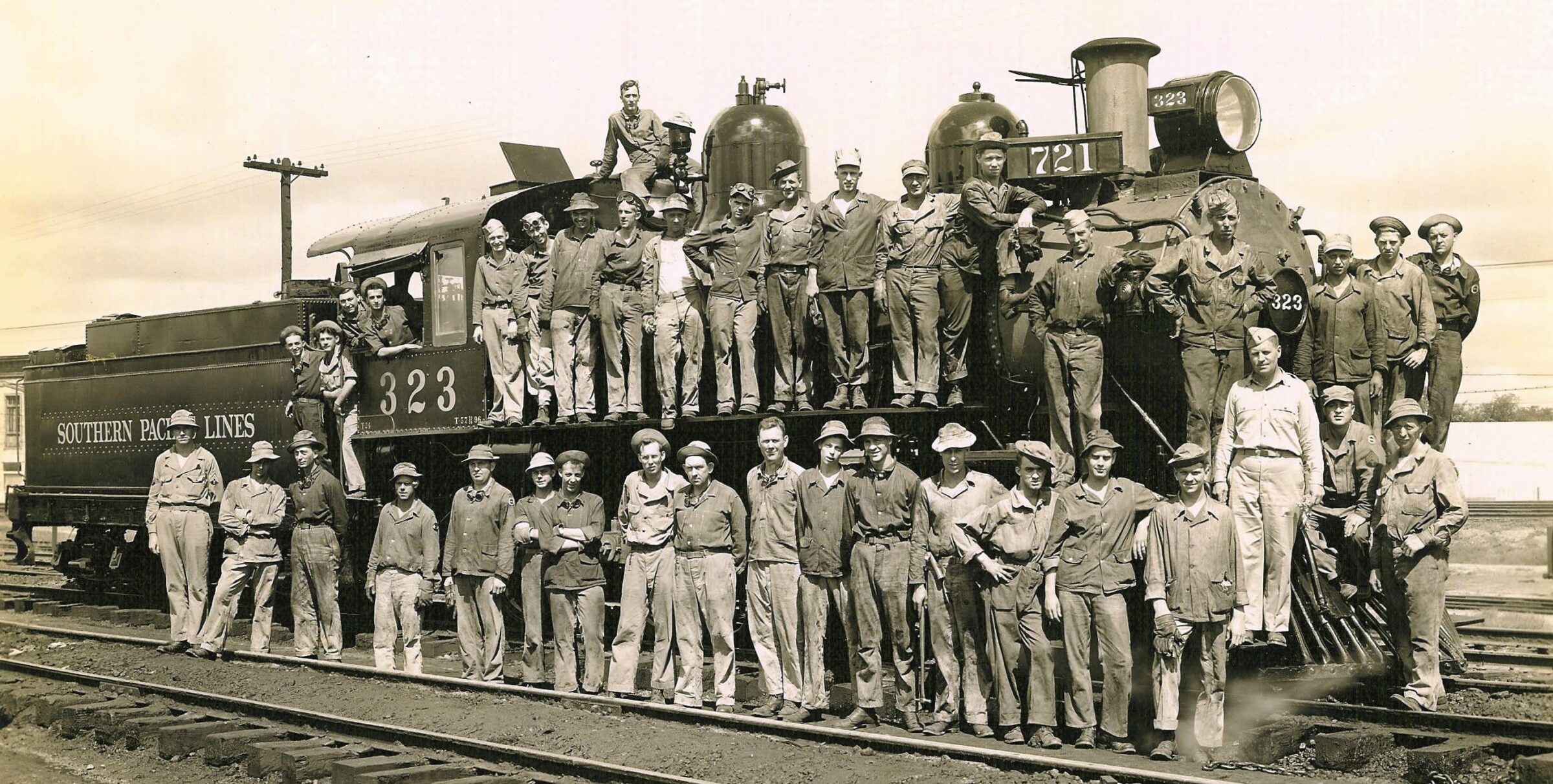
 Americans played a crucial role in the World War II effort in the China-Burma-India (CBI) theater. China had no indigenous arms capability save clubs and stones. American railway operating battalions, like my father’s unit, the 721st, took charge of the rail link from Calcutta to Ledo, India, and ran freight to an eleven-mile-long depot. From there, U.S. Army Air Corps crews made the unforgiving flight over the Himalayas into China in overfilled C-46s and 47s. All told, 225,000 Americans served in CBI, and the American armed forces employed even more local civilians.
In 1943, U.S. Army construction units began building and operating the 1,100-mile-long Stilwell Road (also known as the Ledo Road) through the treacherous mountains of Japanese-occupied Burma to Kunming, China, to support Chiang Kai-shek and his warlords in the fight. These 15,000 U.S. Army construction units were African-American enlisted men with white officers, and they died from enemy attacks, disease, and accidents at the rate of a man a mile. When black truck drivers arrived in Kunming, China, in January 1945, Chiang ordered that they switch with white drivers, so as not to upset his racial sensitivities. General Stilwell intervened, pairing white and black drivers.
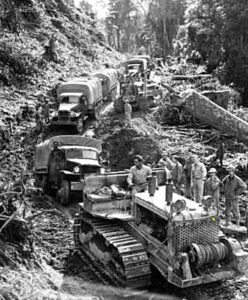 The Allies saw China as a land-based aircraft carrier from which to bomb the Japanese Home Islands until May of 1945, when the atomic bomb campaign took shape on Tinian. Strategically, the Allies needed China in the war on their side to tie down two million Japanese troops. This was never a foregone alliance with Chiang Kai-shek in charge.
China’s contribution to the war was significant, yes, and they lost untold millions to the Japanese. However, the Allies, particularly the Americans and British, bore the heavier burden and made Chinese resistance possible.
Steven James Hantzis, Author
Alexandria, VA
Rails of War: Supplying the Americans and Their Allies in China-Burma-India (University of Nebraska Press, 2017)